On a crusted scalp, scales build up into sticky clusters that form crusts on the head and keep the itching going. Traditional Chinese Medicine links these signs to the Earth Element, which is more in demand at each change of season: the skin pushes out in one place the waste that the body clears poorly.
At a glance
Who is it for
- Clusters of scales that stick to the scalp and form crusts.
- Persistent itching, sometimes a feeling of a tight cap on the head.
Frequency
Do this routine once or twice a week, as needed. Once the scalp is calm, maintain it with products suited to your hair. Drink 1.5 litres of lightly mineralised water every day, in small sips.
Products in the protocol

Scalp crusts and scales: how to recognise the signs
- Clusters of scales that stick to the scalp and form crusts.
- Persistent itching, sometimes a feeling of a tight cap on the head.
- A scalp that is pinkish, grainy or irritated in places.
- Signs that are more visible when the seasons change.
Why a calming product alone is not enough
A soothing product relieves the sensation, but as long as the scalp is congested and covered in crusts, its active ingredients penetrate poorly. For TCM, the crusts must first be softened, then the skin drained and purified deeply, before soothing. This is the order the Géomer protocol follows.
What makes the Géomer approach different
A four-step protocol, as in a hair centre: soften, purify, balance, soothe, with ingredients of natural origin.
What Géomer recommends
Soften the crusts
Purify deeply

Purify with propolis
Soothe the itching
1
Soften the crusts
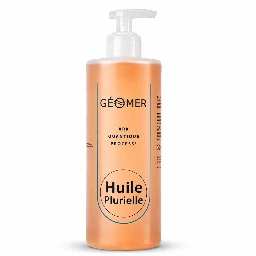
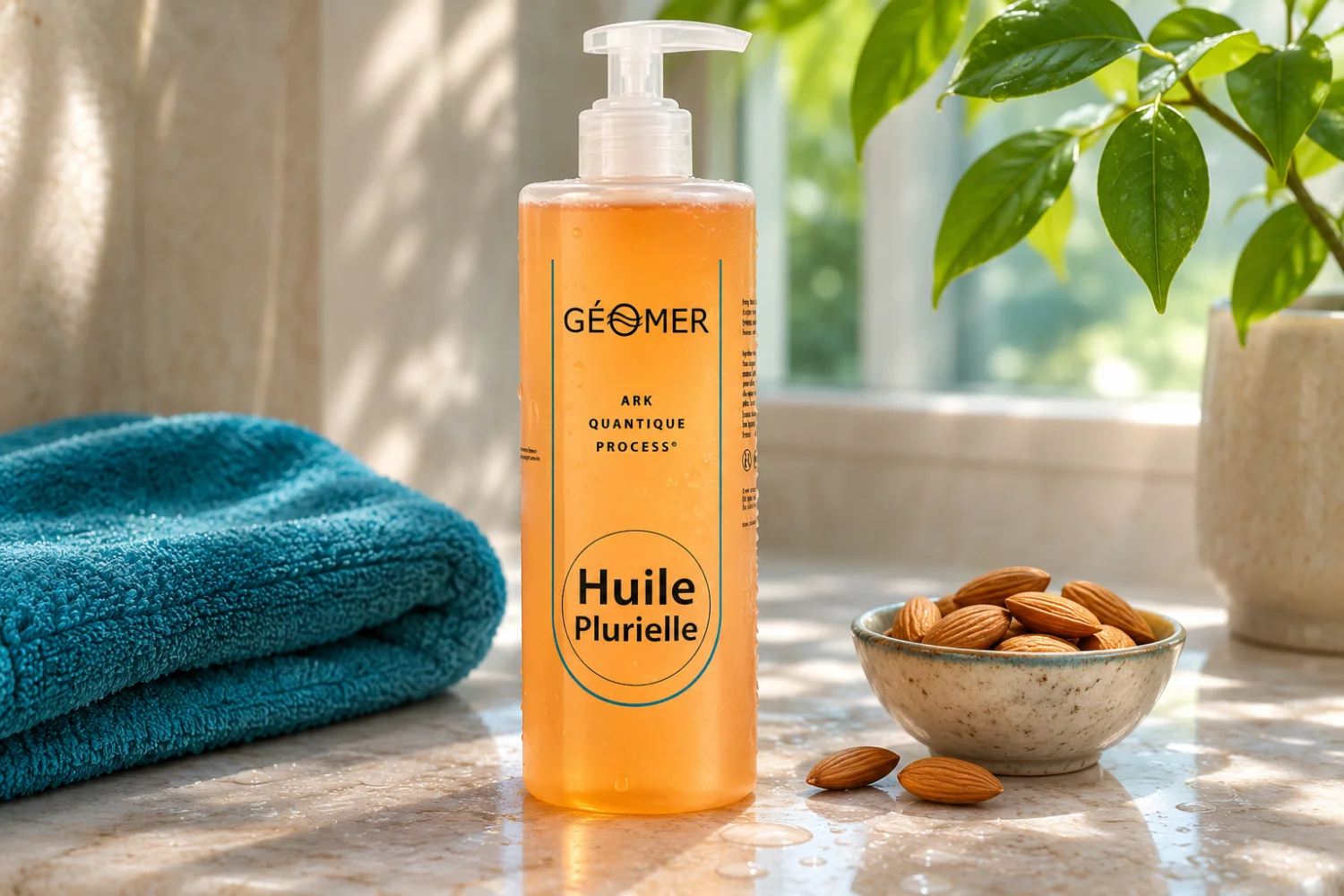
Put a little Plurielle Oil on your fingertip and gently rub the crusts to soak them. Work in small areas and massage until the clusters come away. Never pull them off. If the crusts are light and come off easily, this step can be skipped.
2
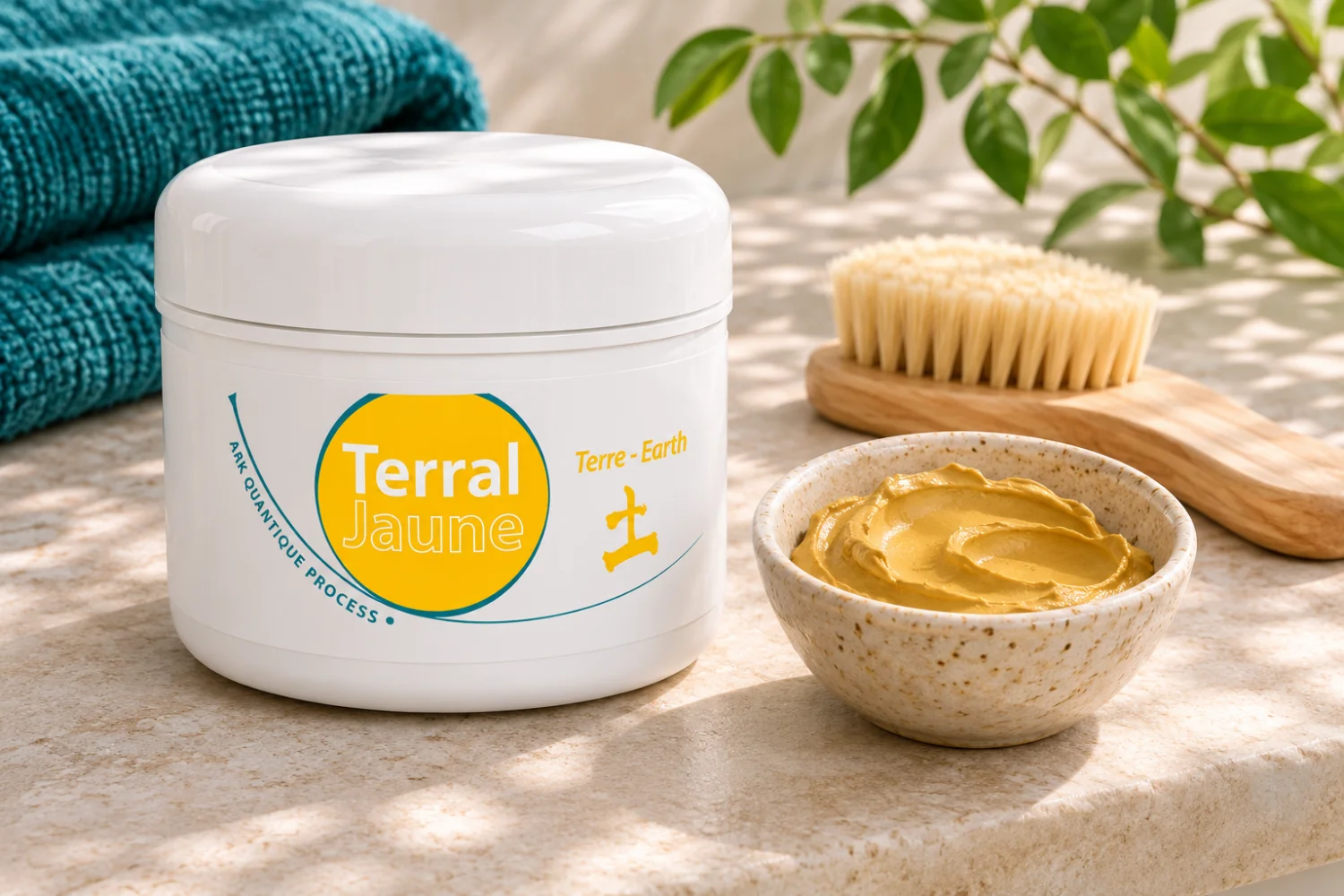
Purify deeply
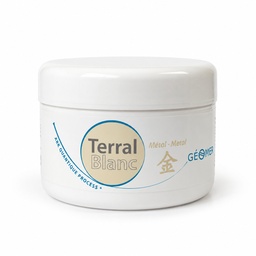
Using a brush, apply a layer of about 1 mm of Terral Jaune to the areas concerned. Leave on for 20 minutes, somewhere calm, without letting it dry, then rinse with lukewarm water and pat dry with a towel. If your scalp is mainly pinkish, grainy and irritated, without thick crusts, use Terral Blanc in the same way instead.
3
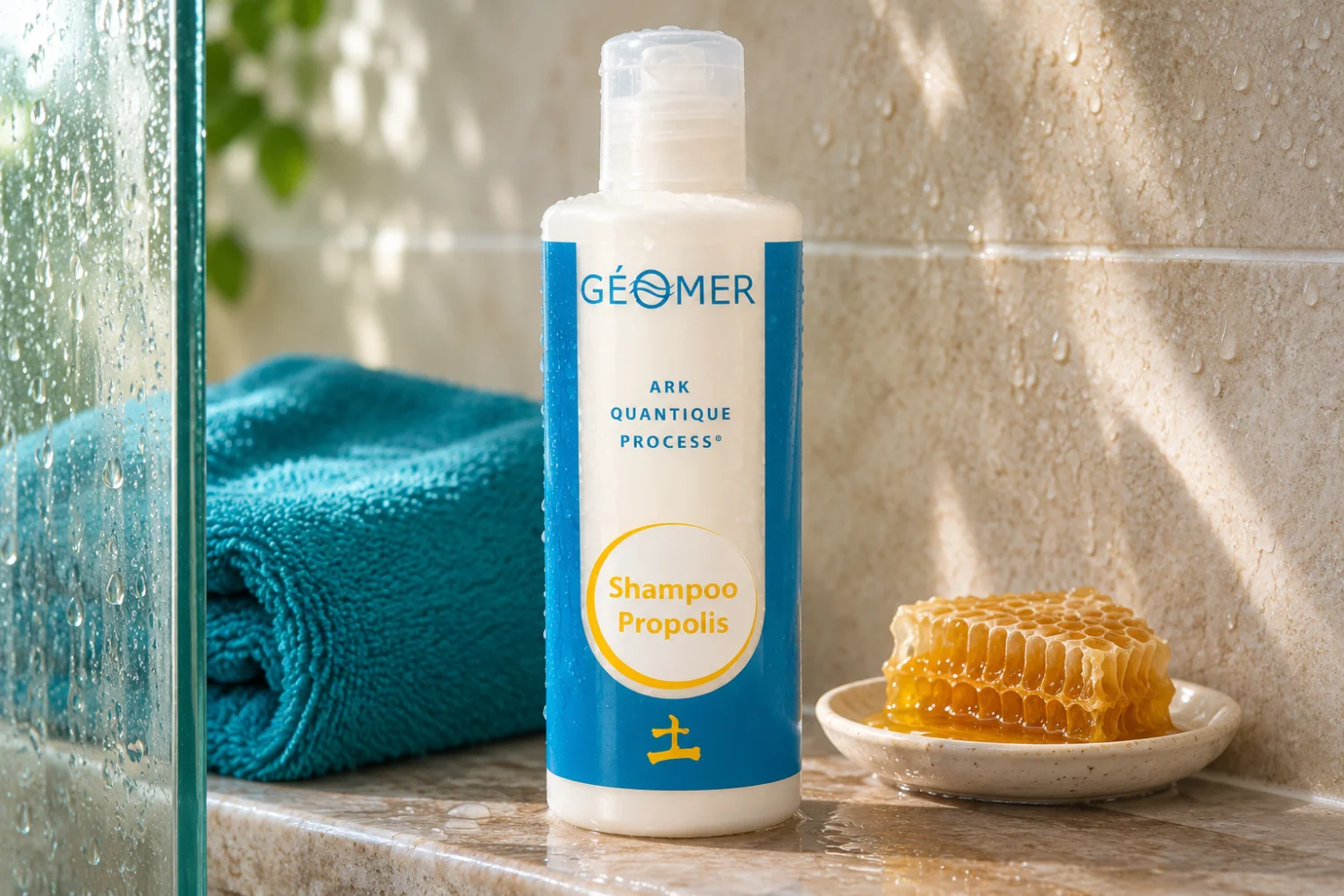
Purify with propolis
On a towel-dried scalp, apply 2 pumps of Propolis Shampoo. Massage with your fingertips without wetting and leave on for 7 minutes. Wet, lather, then rinse: one application is enough.
4
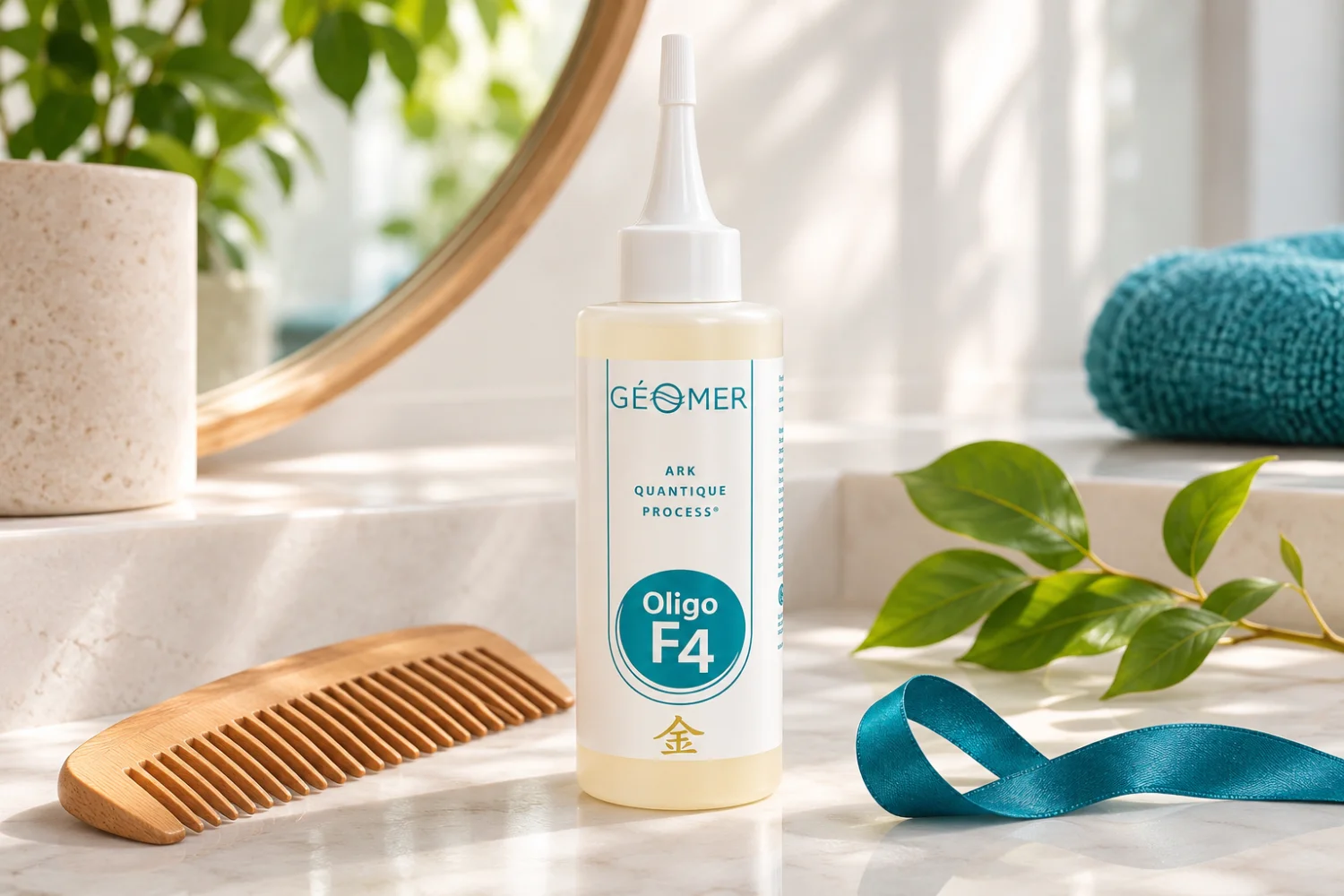
Soothe the itching
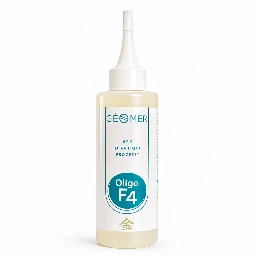
If you feel itchy, spread the equivalent of a teaspoon of Oligo F4 over the whole scalp. Do not rinse, and style as usual.
Cradle cap and children
For babies, cradle cap has its own guide, without products: talk to your paediatrician. This protocol is not intended for children: Oligo F4 is not used before the age of 7, the Terral masks are not recommended for children and Propolis Shampoo is for adults only.
They followed this protocol
Extracts from customer testimonials, quoted word for word in French.
“I use Huile Plurielle to loosen dandruff and crusts.”
Frequency
Do this routine once or twice a week, as needed. Once the scalp is calm, maintain it with products suited to your hair. Drink 1.5 litres of lightly mineralised water every day, in small sips.
Precautions
Terral Jaune, Terral Blanc and Oligo F4 contain essential oils (including eucalyptus and sage): do not use during pregnancy or breastfeeding. Oligo F4 is not used on children under 7; the Terral masks are not recommended for children, elderly people or people with a chronic condition. Propolis Shampoo is for adults only and must not be used if you are allergic to bee products. Oligo F4 contains lemon essential oil: avoid the sun after application. Never pull off the crusts. Do a skin test if you have reactive skin.
This cosmetic protocol is used alongside the follow-up provided by your doctor or dermatologist.
The products used in this protocol
Frequently asked questions
Never by pulling them off, as this can make the skin bleed. Plurielle Oil softens them so that they come away gently.
For TCM, it is a sign of congested skin: soothing ingredients penetrate poorly. A draining mask, such as Terral Blanc, prepares the skin to receive them better.
An irritated scalp covered in crusts is a less favourable terrain for the hair. Soothing the scalp is therefore the first step; if the hair loss continues, see our hair loss protocols.
This protocol may suit these scalps, but each also has its own, more precise protocol. Your dermatologist remains the person to see for the diagnosis.
No. It is a cosmetic protocol, to be used alongside the follow-up provided by your doctor or dermatologist.

This information is provided for informational and holistic purposes. It does not replace the advice of a healthcare professional. If you have a diagnosed condition, consult your doctor.