
⚠️ HEALTH ALERT — APRIL 2026
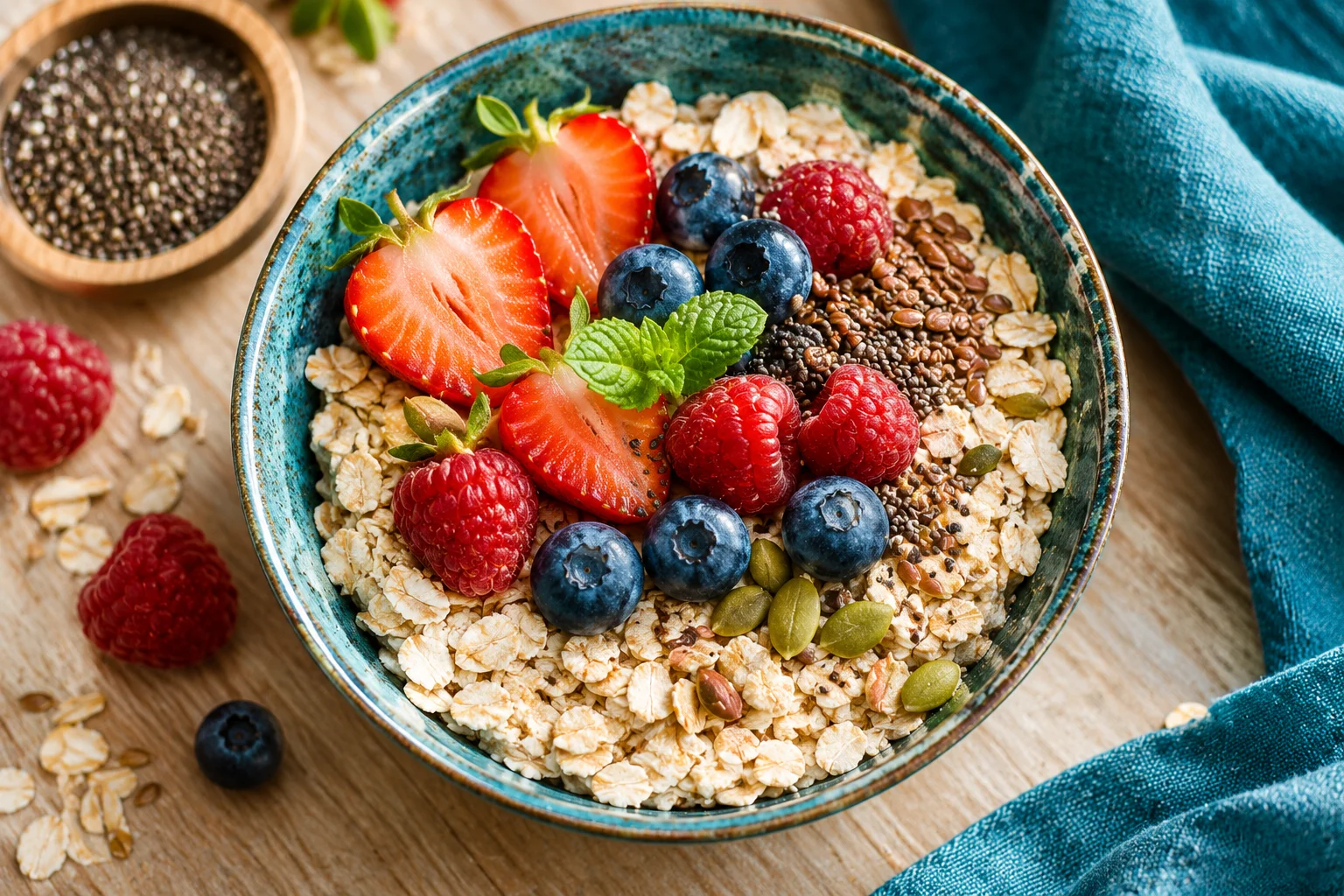
"Care for a bowl of toxic metal with your breakfast?"
The investigation by 60 Millions de Consommateurs published on 23 April 2026 has just revealed that 100% of the oat flakes analysed contain cadmium, a metal classified as carcinogenic. Here is what is really going on, and how you can protect yourself.
Cadmium in oat flakes: key points
- 100% of the oat flake brands tested by 60 Millions de Consommateurs in April 2026 contain cadmium
- Cadmium is classified as a known carcinogen by the IARC (Group 1) and as toxic to reproduction
- Food accounts for 98% of our exposure to cadmium (Anses report, March 2026)
- A 2024 meta-analysis looked at the role of silicon in the accumulation of cadmium in the body
- Géomer recommends MMST organic silicon at a stable 1,200 mg/L, alongside a varied diet
Cadmium in oat flakes: the truth about 12 brands tested
Cadmium in oat flakes is now a proven and documented reality. On 23 April 2026, the magazine 60 Millions de Consommateurs published the results of an analysis of twelve oat flake products: major brands, retailer own brands, organic and non-organic products.
The verdict is clear-cut: although no pesticide residues were detected, cadmium was found in 100% of the samples. No exception. No brand spared.
Results of the 60 Millions de Consommateurs investigation
12 / 12
oat flake products contaminated with cadmium
Organic or not, own brand or major brand: none escapes the contamination
Which oat flake brands contain the most cadmium?
| Oat flake brand | Cadmium content | Level of contamination |
|---|---|---|
| Quaker Oats | 0.019 mg/kg | The highest |
| Chabrior (Intermarché) | 0.019 mg/kg | The highest |
| Other brands tested | Between 0.008 and 0.018 mg/kg | Variable |
| Celnat | 0.008 mg/kg | The least contaminated |
Source: 60 Millions de Consommateurs, 23 April 2026
⚠️ Worth remembering: For a 70 kg person eating 45 g of Quaker Oats or Chabrior daily, this already represents 3.5% of the tolerable weekly dose of cadmium set by the French health authorities. And that is oat flakes alone, among many other sources of cadmium in food.
The dangers of cadmium in food: why be concerned?
Cadmium is not an ordinary contaminant. It is a heavy metal classified as CMR by the European health authorities:
?
Carcinogenic
Classified as "known human carcinogen" by the IARC (Group 1)
?
Mutagenic
Causes DNA alterations, heritable genetic mutations
⚠️
Toxic to reproduction
Toxic to reproduction and embryonic development
What are the effects of cadmium on health?
Once absorbed, cadmium gradually accumulates in the body with an extremely long biological half-life (10 to 30 years). Effects often appear after years of exposure:
Kidney damage
The kidney is the main target organ. Chronic kidney failure, proteinuria, tubular disorders.
Bone fragility
Demineralisation, accelerated osteoporosis, bone pain (itai-itai disease in Japan).
?️ Cancer risks
Cancers of the lung, kidney, breast and prostate associated with prolonged exposure.
Cardiovascular system
Hypertension, atherosclerosis, increased risk of heart attack and stroke.
? Reproduction
Reduced fertility, foetal malformations, developmental disorders in children.
?️ Immune system
Weakened defences, increased chronic inflammation.
Where does the cadmium on our plates come from?
To understand the scale of the problem, we have to go back to the source. Cadmium contaminates our food through a cascading chain that begins in the fields.
The cadmium cycle in food
The damning ANSES report on cadmium
In an expert assessment made public on 25 March 2026, the French National Agency for Health Safety (Anses) sounded the alarm on cadmium contamination in food. Here is its conclusion :
“Food is by far the major source of exposure, accounting for up to 98% of cadmium impregnation in the non-smoking population.”
— Anses, March 2026
In other words: you cannot escape cadmium simply by avoiding oat flakes. It is everywhere: cereals, leafy vegetables, offal, seafood, chocolate, potatoes... The contamination is systemic.
Cadmium in food: the key figures
- 98% of cadmium exposure comes from food (Anses 2026)
- 2.45 μg/kg of body weight: tolerable weekly intake
- 10-30 years: biological half-life of cadmium in the body
- 100% of the oat flakes tested were contaminated (60M, April 2026)
The government's inaction in the face of the cadmium scandal
Given the seriousness of the situation and Anses's repeated warnings, one might have expected strong measures. There are none. The government remains silent, and it is now up to civil society to mobilise.
A bill has been tabled
Members of parliament from the ecologist and social group have tabled a bill “aimed at protecting the food of French men and women from cadmium contamination”. A welcome initiative, but one that is struggling to find an echo in the majority.
✊ A citizens' petition mobilises people
A citizens' petition has been launched on the National Assembly website. It has already gathered more than 10,000 signatures, a sign of consumers' growing concern.
While waiting for the public authorities to decide to act, one certainty remains: it is up to you to take care of your body. Fortunately, nature offers us natural solutions that are scientifically documented.
Organic silicon and cadmium: what the studies show
Here is some good news in the middle of this storm: the interactions between silicon and cadmium are the subject of extensive research. Scientists have been studying them for decades.
?️ A recent meta-analysis is unequivocal
The analysis of 248 scientific studies showed that silicon reduces cadmium accumulation in living organisms by:
-31,9%
How does silicon act against cadmium?
The mechanisms by which silicon acts against cadmium are multiple and complementary. Here is what the scientific review by Hou et al. (2023) established:
⚡ 1. Silicon and cadmium: what the studies say
Silicon forms stable complexes with cadmium (cadmium silicates), which are then eliminated through the urine. The cadmium is “trapped” and neutralised.
2. Reduced absorption
Silicon reduces the intestinal absorption of cadmium by blocking the cellular transporters involved in its passage into the blood.
?️ 3. Antioxidant protection
Silicon stimulates antioxidant enzymes (superoxide dismutase, catalase, glutathione) that neutralise the free radicals produced by cadmium.
4. Cellular reinforcement
Silicon strengthens cell membranes and the extracellular matrix, creating a natural barrier against the assaults of heavy metals.
Clinical studies on silicon and cadmium
A study published in 2017 showed that the presence of silicon could reduce the influx of cadmium into cells by up to 15.7 times. Considerable protection.
Another study from 2020 established that the combination of silicon + selenium could reduce the cadmium concentration in tissues by 73.2%.
To understand everything about organic silicon
Discover our complete 2026 guide with more than 20 scientific studies, the benefits, the dosages and the mechanisms of action explained in detail.
Read the complete guide to organic silicon →Which organic silicon should you choose?
A word of caution, however: not all silicons are equal. To be effective against heavy metals such as cadmium, silicon must have three essential qualities:
- A bioavailable form: MMST (Monomethylsilanetriol) offers 80% bioavailability against 5-10% for plant silica
- A high, stable concentration: at least 1,200 mg/L, documented as stable over time
- Pharmaceutical quality: analyses, traceability, no heavy metals in the product itself
This is precisely what the Laboratoire Géomer has offered since its creation. The only ones to guarantee 1,200 mg/L stable within a complete holistic TCM range, our formulations are based on the original formula of Norbert Duffaut (Bordeaux, 1957) and benefit from our exclusive ARK Quantique Process®.
How to protect yourself from cadmium in oat flakes: a 4-step plan
Rather than giving in to panic, act wisely. Here is a four-step action plan to reduce your exposure to cadmium and take care of your body:
Choose the least contaminated brands of oat flakes
According to the survey, Celnat shows the lowest levels (0.008 mg/kg). Favour brands with control analyses available. Avoid the most contaminated brands (Quaker Oats, Chabrior).
Vary your breakfasts
Don't limit your exposure to a single source: alternate with other cereals (buckwheat, millet, quinoa), fresh fruit, eggs or dairy. Variety remains your best ally against cadmium in food.
Start a course of organic silicon
To support your body: starter course for the first 30 days = 3 × 25 ml/day. Then maintenance course = 25 ml/day on an empty stomach in the morning. See the complete guide to organic silicon for all the details.
Support citizen action
Sign the citizens' petition on the National Assembly website. The stronger the mobilisation, the more the public authorities will be compelled to act at the source of the problem.
Frequently asked questions about cadmium in oat flakes
Scientific references on cadmium and silicon
Every claim in this article is based on reliable, verifiable sources. Here are the complete references, if you wish to go further:
Media and institutional sources
- 60 Millions de Consommateurs — Investigation into cadmium in oat flakes, 23 April 2026.
→ Read the investigation - Anses — Cadmium: acting now at the source of soil contamination, 25 March 2026.
→ See the Anses report - Anses — Exposure to cadmium: limit values for the population, 2019.
→ See the assessment - Reporterre — Cadmium in food: Anses calls for action.
→ Read the article - National Assembly petition — For the protection of the French people against cadmium.
→ Support the petition
Scientific studies on silicon and cadmium
- Hou L, Ji S, Zhang Y, et al. The mechanism of silicon on alleviating cadmium toxicity: A review. Frontiers in Plant Science. 2023.
→ Read the full review - 2024 meta-analysis — Silicon reduces toxicity and accumulation of cadmium. Science of The Total Environment. 2024 (248 studies analysed).
→ See the meta-analysis - Cui J, Liu T, Li F, et al. Silica nanoparticles alleviate cadmium toxicity: reduction of cellular influx by up to 15.7x. 2017.
→ See the study on PubMed - Synergistic effect of silicon and selenium — 73.2% reduction of cadmium in tissues. 2020.
→ See the study on PubMed - Silicon-induced reversibility of cadmium toxicity. Journal of Experimental Botany. 2016.
→ See the study on PubMed - Effect of silicon on reducing cadmium toxicity in durum wheat. 2012.
→ See the study on PubMed
For the complete list of more than 20 scientific studies on organic silicon, see our complete 2026 guide.
Take back control of the cadmium in your food
In the face of the widespread contamination of our food by cadmium, inaction is not an option. You cannot control everything — you do not choose the composition of the soil, nor industrial farming practices. But you can choose how you protect yourself day to day.
MMST organic silicon is not a miracle remedy: it is an essential trace element, scientifically studied in relation to cadmium, which helps your body defend itself against modern aggressions. Géomer advises its Silicium Organique Forté or Vitalis, of pharmaceutical quality, for lasting use.
“When I read this investigation into cadmium in oat flakes, I first felt anger. Then I remembered that my mission, for 20 years, has been precisely to give people the tools to protect themselves. Authentic organic silicon is not a fad: it is one of the elements science studies most closely in the relationship between our body and metals. Take care of yourself. It is the most important thing.”
With all my attention,
And above all: take good care of your body.
It is where your soul has chosen to dwell.
Alain Ledroit
CEO Laboratoire Géomer
Reiki Usui Master, creator of the ARK Quantique Process®
Regulatory information: Food supplements are not a substitute for a varied and balanced diet and a healthy lifestyle. Keep out of the reach of young children. Do not exceed the recommended daily dose. Ask your healthcare professional for advice. This article is for information purposes only and does not constitute medical advice.
Scientific sources: This article is based on institutional sources (Anses, 60 Millions de Consommateurs, Reporterre) and international scientific publications referenced on PubMed and in peer-reviewed journals. All references can be consulted via the links provided.