Organic silicon is one of the best-kept secrets of natural wellbeing. Discover in this complete guide everything you need to know about this essential trace element, what research says about it and how to choose it well.
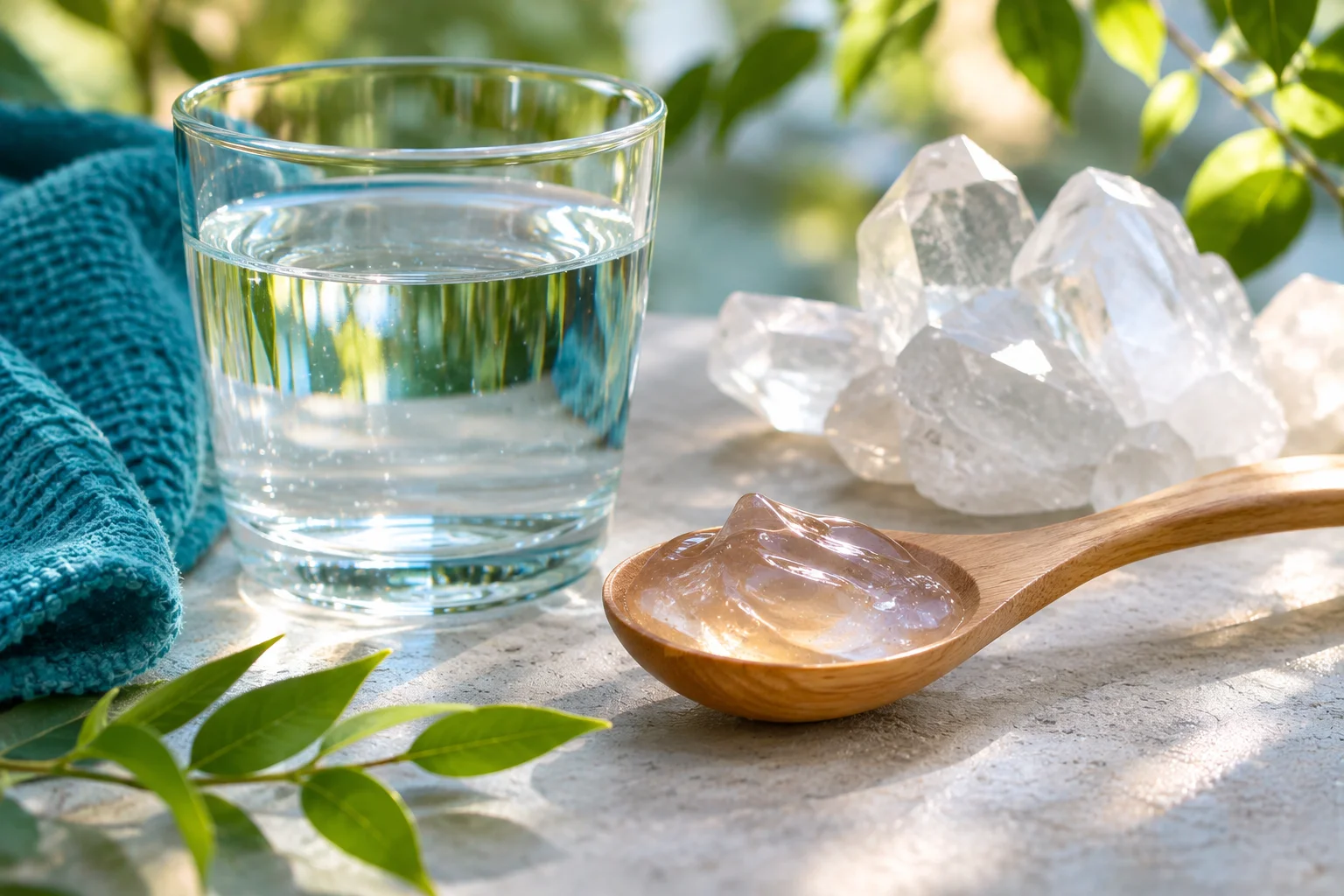
What is organic silicon?
Organic silicon is a bioavailable form of silicon, the second most abundant element in the Earth's crust after oxygen. Unlike the mineral silicon found in rocks and crystals, organic silicon has a molecular structure that allows its optimal assimilation by the human body.
Scientific definition
Organic silicon refers to compounds in which silicon is bonded to carbon-based molecules, creating structures that living cells can assimilate. The most bioavailable and most studied form is MMST (Monomethylsilanetriol), which has a bioavailability of nearly 80%.
Chemical formula of MMST: CH₃-Si(OH)₃
Silicon in the human body
The adult body contains approximately 7 grams of silicon, concentrated mainly in:
Connective tissues
Bones, cartilage, tendons, ligaments - structure and resilience
Nervous system
Brain, nerves - transmission of nerve impulses
Skin and appendages
Epidermis, hair, nails - elasticity and growth
Circulation and vessels
Arterial walls - flexibility and resilience
⚠️ The natural decline of silicon with age
From the age of 25-30, our body begins to lose its silicon capital gradually and irreversibly. This decrease accelerates with age:
- At age 40: Loss of 30-40% of the initial capital
- At age 60: Loss of 50-60% of the initial capital
- At age 80: Loss of 70-80% of the initial capital
History and discovery of MMST organic silicon
1957: The innovation of Dr. Norbert Duffaut
The history of modern organic silicon began in 1957 in Bordeaux, in the laboratory of Dr. Norbert Duffaut. A visionary organic chemist, he achieved the first stable synthesis of Monomethylsilanetriol (MMST), thereby creating the most bioavailable form of silicon ever developed.
This revolutionary discovery made it possible for the first time to obtain a stable organic silicon, soluble in water and perfectly assimilable by the human body. Duffaut's work laid the scientific foundations of all modern organic silicons.
The pioneers of organic silicon
- Dr. Norbert Duffaut (1957)
Chemist, University of Bordeaux
Original synthesis of MMST - Philippe Voisin
Expert Pharmacist, Ministry of Health
Development and validation - Prof. Christopher Exley
Birchall Centre, Keele University
World reference on aluminium/silicon
The scientific evolution of organic silicon
1957-1970: Fundamental research
Synthesis of MMST by Duffaut. First studies on bioavailability and tolerance.
1970-1990: Clinical development
Philippe Voisin develops the applications of MMST. First studies in humans.
1990-2010: Scientific validation
A growing number of studies (PAQUID, Davenward, Barel, Jugdaohsingh). International recognition.
2010-2026: Democratisation
Access for the general public. New formulations and wellbeing applications.
MMST vs other forms of silicon: the complete comparison
Not all forms of silicon are equal. Bioavailability - that is, the body's ability to assimilate it - varies enormously depending on the molecular form.
| Form of silicon | Bioavailability | Stability | Advantages | Drawbacks |
|---|---|---|---|---|
| MMST (Monomethylsilanetriol) | 80% | Excellent | Maximum bioavailability, crosses the blood-brain barrier | High production cost |
| Stabilised orthosilicic acid | 60% | Good | Good assimilation, moderate cost | Limited stability over time |
| Colloidal silicon | 40% | Average | Easy to produce | Variable bioavailability |
| Plant silica (horsetail, bamboo) | 5-10% | Very good | Natural, economical | Very poor assimilation |
| Mineral silica | < 1% | Perfect | Very economical | Almost unusable by the body |
Why is MMST superior?
⚗️ Optimal molecular structure
Its small size allows it to cross all biological barriers
Exceptional stability
Does not degrade and keeps its properties over time
Maximum bioavailability
80% assimilation vs 5-10% for plant forms
Benefits of organic silicon: what research shows
After more than 60 years of research, the benefits of organic silicon are now widely documented in the international scientific literature. Here is an overview of the effects studied.
Skeletal and joint system
- Bone remineralisation: Helps with collagen synthesis and calcium fixation
- Joint flexibility: Contributes to the quality of the synovial fluid
- Cartilage regeneration: Helps with the synthesis of glycosaminoglycans
- Bone density: Contributes to maintaining it with age
Reference studies: Jugdaohsingh (2007), Spector et al. (2008), Reffitt et al. (2003)
Circulation and vessels
- Arterial elasticity: Maintains the flexibility of vessel walls
- Blood pressure regulation: Helps balance the circulation
- Endothelial protection: Helps maintain the integrity of the inner lining of the vessels
- Arterial flexibility: Contributes to limiting the stiffening of the arteries with age
Reference studies: Reffitt et al. (2003), Jurkić et al. (2013)
Nervous system and cognition
- Silicon and aluminium: A link studied by research (see the studies below)
- Nerve transmission: Helps with the conduction of nerve impulses
- Maintaining cognitive function: Contributes to memory and concentration
Reference studies: Davenward and Exley (2013), Rondeau PAQUID (2009), Jones et al. (2017)
Skin and appendages
- Collagen synthesis: Maintains skin firmness and elasticity
- Deep hydration: Improves water retention in the tissues
- Hair growth: Helps with keratinisation and growth
- Nail strength: Reinforces the keratin structure
Reference studies: Barel et al. (2005), Wickett et al. (2007), Araújo et al. (2016)
?️ Immune system
- Immune modulation: Contributes to the balance of the body's defences
- Balance: Supports the body's proper functioning
- Natural antioxidant: Helps counter free radicals
- Tissue repair: Helps with the healing processes
Reference studies: Carlisle (1970), Nielsen (2014)
Digestive system
- Mucosal regeneration: Helps with the renewal of the intestinal wall
- Improved absorption: Optimises the assimilation of nutrients
- Microbiota balance: Supports a healthy intestinal flora
- Digestive comfort: Contributes to soothing the digestive sphere
Reference studies: Martin (2007), Rondanelli et al. (2021)
Key clinical studies on organic silicon
Scientific research on organic silicon builds on decades of rigorous clinical studies. Here are the most significant works that have established its place in nutritional research.
Silicon and aluminium: what research says
Davenward & Exley study (2013)
Protocol: 15 elderly people, silica-rich water (1 L/day), 12 weeks
Results: Significant increase in urinary excretion of aluminium.
Conclusion: First observation in humans of the role of silicon in the elimination of aluminium.
? Read the full study on PubMed →PAQUID study - Rondeau/INSERM (2009)
Protocol: 1,925 subjects followed for 15 years, correlation between aluminium and silicon in drinking water
Results: A higher level of silicon in drinking water is associated with less age-related cognitive decline (adjusted RR = 0.73).
Conclusion: Silicon could help preserve cognitive function with age.
? Read the PAQUID study on PubMed →Bone and joint health
Spector et al. study (2008)
Protocol: Randomised double-blind study, women with low bone density, supplementation with stabilised orthosilicic acid
Results: Stimulation of bone formation markers in addition to calcium/vitamin D3.
Conclusion: Silicon is essential for maintaining bone mass.
? Read the study on PubMed →Jugdaohsingh study (2007)
Protocol: Comprehensive review of 30 years of research on silicon and bone health
Results: Strong positive associations between silicon intake and bone mineral density, particularly in men and pre-menopausal women.
Conclusion: Confirmation of the structural role of silicon in bone health.
? Read the study on PubMed →Skin, hair and nails
Barel et al. study (2005)
Protocol: Randomised double-blind study, 50 women with photodamaged skin, 10 mg silicon/day for 20 weeks
Results: Significant improvement in skin elasticity, reduced roughness, strengthening of nails and hair.
Conclusion: First clinical evidence of the effectiveness of silicon on skin beauty.
? Read the study on PubMed →Wickett et al. study (2007)
Protocol: Randomised double-blind study, women with fine hair, 10 mg silicon/day for 9 months
Results: Significant improvement in hair strength and morphology.
Conclusion: Silicon structurally strengthens fragile hair.
? Read the study on PubMed →Recent meta-analyses and systematic reviews
Review by Rondanelli et al. (2021) - Experimental Biology and Medicine
Title: "Silicon: A neglected micronutrient essential for bone health"
Objective: Synthesis of data on the role of silicon as an essential micronutrient.
Main conclusions:
- Nutritional status: Silicon should be recognised as an essential micronutrient
- Crucial bioavailability: Only bioavailable forms (MMST, OSA) show clinical efficacy
- Safety of use: Excellent tolerance profile at the recommended doses
- Structural effect: Key role in the bone matrix and connective tissues
Mechanisms of action of organic silicon
Understanding how organic silicon works helps reveal the full extent of its benefits. Its mechanisms of action are multiple and synergistic.
Collagen synthesis
Silicon acts as an enzymatic cofactor of prolyl-4-hydroxylase and lysyl hydroxylase, enzymes essential for the formation of the hydroxylated bridges that stabilise the collagen triple helix (Reffitt 2003).
Benefit: Improved skin firmness, bone consolidation, joint flexibility.
⚡ Mineral balance
Silicon forms stable complexes with aluminium, lead and cadmium. Its electronegative charge attracts these metals to form hydroxyaluminosilicates that are easily eliminated (Davenward & Exley 2013).
Benefit: Maintaining cognitive function, elimination of aluminium and heavy metals.
⚖️ Regulation of homeostasis
Silicon modulates the activity of many cell signalling pathways, in particular the cascades involved in inflammation, apoptosis and tissue repair (Jurkić et al. 2013).
Benefit: Balance of the body's defences, healing, adaptation to stress.
Membrane stabilisation
Silicon integrates into the extracellular matrix and cell membranes, improving their selective permeability and their resistance to aggression (Carlisle 1970).
Benefit: Better tissue hydration, protection against oxidation, cell longevity.
Cycle of action of organic silicon
?
ABSORPTION
Small intestine
→
?
DISTRIBUTION
Target tissues
→
⚗️
ACTION
Biochemical
→
?
ELIMINATION
Renal route
Plasma half-life: 4-6 hours • Complete elimination: 24-48 hours
Health and wellbeing applications of organic silicon
Organic silicon finds applications in many areas of health and wellbeing. Here is an overview of the best-documented uses.
Applications by stage of life
Childhood and adolescence (0-18 years)
- Optimal bone growth
- Development of the nervous system
- Natural defences
- Quick healing
Active life (18-50 years)
- Managing oxidative stress
- Physical performance
- Muscle recovery
- Supporting the ageing process
Maturity (50+ years)
- Maintaining bone mass
- Vascular flexibility
- Cognitive preservation
- Support for mineral balance
Specialised usage protocols
Sport and recovery
Sports dosage: 50-75 ml/day in a 3-month course
- Pre-exercise: Tendon and muscle preparation
- Post-exercise: Easing of muscle soreness
- Recovery: Regeneration of micro-lesions
- Prevention: Support for joints and tendons
Anti-ageing and longevity
Longevity protocol: 25-30 ml/day, continuously
- Telomeres: Preservation against cellular shortening
- Collagen: Maintaining tissue elasticity
- Vitality: Supports the body day to day
- Cognition: Maintaining cognitive function
⚡ Support for mineral balance
Intensive course: 75 ml/day for 2-3 months
- Aluminium: Interactions studied by research
- Lead: Mobilisation of tissue deposits
- Cadmium: Protection against accumulation
- Mercury: Facilitating excretion
✨ Beauty and aesthetics
Beauty course: 25 ml/day + topical application
- Skin: Firmness, elasticity, hydration
- Hair: Growth, shine, strength
- Nails: Strength, faster growth
- Skin healing: Repair and regeneration
Dosages and usage protocols for organic silicon
The effectiveness of organic silicon depends largely on following the appropriate dosages and taking it regularly. Here are the protocols drawn from experience.
Recommended basic protocol
⚡ Loading phase (D1-D30)
3 × 25 ml per day
Spread through the day, preferably on an empty stomach (morning, noon, evening). Rapid saturation of the tissues.
Maintenance phase (for life)
25 ml per day
Continuous daily intake, ideally in the morning on an empty stomach. Maintaining optimal levels.
Specific dosages depending on your goal
General well-being (prevention)
15-25 ml/day
Supporting vital functions, helping to prevent the signs of ageing, maintaining energy.
Specific concerns
25-50 ml/day
Joint comfort, sports recovery, chronic stress, sensitised skin.
⚡ Intensive course
50-75 ml/day
Increased needs, intensive course, convalescence.
Sports performance
50-100 ml/day
Competition preparation, intensive recovery, injury prevention.
Tips for getting the most from your intake
✅ DO
- Take on an empty stomach (30 minutes before a meal)
- Hold in the mouth for 1-2 minutes
- Drink with pure water
- Keep to a regular routine
- Store in a cool place after opening
❌ AVOID
- Mixing with fizzy drinks
- Taking it with metal (a spoon)
- Storing in full light
- Frequent interruptions
- Overdosing without follow-up
How to choose your organic silicon: a complete buying guide
With so many offers on the market, choosing a quality organic silicon means knowing the essential criteria. Here are the keys to making the right choice.
The 7 essential criteria
1️⃣ Molecular form
MMST (Monomethylsilanetriol) only. Avoid "plant silica", "colloidal silicon" or other vague names. Insist on explicit mention of MMST.
2️⃣ Guaranteed concentration
At least 500 mg/L, ideally 1200 mg/L. Be wary of fanciful concentrations (10,000 mg/L) that are scientifically impossible.
3️⃣ Documented stability
Shelf life of at least 24 months. The MMST must remain stable, with no degradation or precipitation.
4️⃣ Purity and analyses
Purity analyses available. Absence of heavy metals, pesticides and residual solvents. Strict microbiological controls.
5️⃣ Origin and traceability
Manufacture to pharmaceutical standards. Full traceability of the raw material. European origin preferred.
6️⃣ Suitable packaging
Opaque bottles (brown glass or HDPE plastic). Airtight closure. Protection against UV and oxidation. Never transparent packaging.
7️⃣ A fair price
Authentic MMST: €20-120 per litre. Be wary of prices that are too low (poor-quality silicon) or unreasonably high (excessive marketing).
The Laboratoire Géomer difference
The only ones to guarantee 1,200 mg/L stable in a complete holistic TCM range
⚗️
Authentic MMST
Original Duffaut-Voisin formula (1957) • 80% bioavailability
?
ARK Quantique Process®
MMST + TCM 5 Elements + Reiki energisation
?
Pharmaceutical quality
Complete analyses • Full traceability • Documented stability
Frequently asked questions about organic silicon
Here you will find answers to the most common questions about organic silicon, how it is used and its benefits.
❓ What is the difference between organic silicon and plant silica?
Organic silicon (MMST) is a synthetic molecule that is perfectly assimilable (80% bioavailability). Plant silica (horsetail, bamboo) contains silicon in a mineral form that is very poorly assimilated (< 10%). The two are simply not comparable in effectiveness.
❓ How long before the first effects are felt?
The first effects may appear after as little as 15-30 days (energy, recovery). For structural benefits (bones, skin, hair), allow 3-6 months, according to clinical studies (Barel 2005 : : 20 weeks, Wickett 2007 : : 9 months). Regularity is essential.
❓ Are there any contraindications or side effects?
Organic silicon is remarkably well tolerated. No significant side effects have been reported in the scientific literature at the recommended dosages. Not recommended only for pregnant and breastfeeding women, as a precaution. In case of severe kidney disease, seek medical advice.
❓ Can I combine organic silicon with other supplements?
Yes, no problem. Organic silicon even works in synergy with vitamin C (collagen synthesis), magnesium (muscle relaxation) and omega-3s (balance of the body). Just avoid taking it at the same time as medicinal chelators (EDTA, DMSA), which could interfere.
❓ From what age can you start organic silicon?
In theory from age 3, under parental supervision (adapted doses). In practice, it is mainly relevant from age 25-30, when the natural loss of silicon begins. The earlier you start, the more you preserve your health capital over the long term.
❓ How should organic silicon be stored?
Before opening: room temperature, away from light. After opening: refrigeration is essential (2-8°C). Use within 2 months of opening. Never freeze. Protect from heat and temperature variations.
Our organic silicon solutions with ARK Quantique Process®
Backed by this scientific expertise, the Laboratoire Géomer offers you two exceptional formulations, both energised according to our exclusive ARK Quantique Process® protocol.
Silicium Organique Forte
The absolute reference since 1957
? Composition
- Pure MMST at 1,200 mg/L, documented as stable
- Authentic Duffaut-Voisin formula (1957)
- Optimal bioavailability: 80%
- Energised with ARK Quantique Process®
Main uses
- Bone mineralisation
- Support for mineral balance
- Sports recovery and anti-ageing
- Immune and energy support
Silicium Organique Vitalis
The enhanced premium formula
? Composition
- MMST 1,200 mg/L + Ellagitannins from Chestnut
- Organic silicon: the intensive course
- Protection of the intestinal "second brain"
- Energised with ARK Quantique Process®
Main uses
- Cognitive function
- Balance of the gut-brain axis
- Enhanced anti-free-radical protection
- Optimising overall well-being
“After more than 20 years of research into organic silicon and the creation of the ARK Quantique Process®, I can say that authentic MMST is one of the most precious supplements for preserving our health capital. Personally, I take 25 ml of Silicium Vitalis every morning, and have done for years. This routine helps me maintain my vitality, my mental clarity and to counter the daily exposure to the toxins of our modern environment.”
— Alain Ledroit
CEO of Laboratoire Géomer, Reiki Usui Master, creator of the ARK Quantique Process®
To go further on organic silicon
- Organic Silicon
- Organic silicon: why drink a dose every day
- Silicon and Beauty: the element your skin is asking for after 35
- Plant, animal, marine collagen… What if the real question lay elsewhere?
- Drinking collagen to look younger: the mistake almost everyone makes
- Fascia: Revealing the Hidden Intelligence of Your Skin
- Microplastics, aluminium, heavy metals: what role for silicon?
- Silicium Vitalis testimonial: Florence's opinion | Géomer
Scientific references
All the statements in this guide on organic silicon are based on the international scientific literature. Here are the full references of the studies cited, available on PubMed and in peer-reviewed journals.
Silicon and aluminium: what research says
- Davenward S, Bentham P, Wright J, Crome P, Job D, Polwart A, Exley C. Silicon-rich mineral water as a non-invasive test of the 'aluminum hypothesis' in Alzheimer's disease. Journal of Alzheimer's Disease. 2013;33(2):423-430.
→ See the study on PubMed | DOI : 10.3233/JAD-2012-121231 - Rondeau V, Jacqmin-Gadda H, Commenges D, Helmer C, Dartigues JF. Aluminum and Silica in Drinking Water and the Risk of Alzheimer's Disease or Cognitive Decline: Findings From 15-Year Follow-up of the PAQUID Cohort. American Journal of Epidemiology. 2009;169(4):489-496.
→ See the PAQUID study on PubMed | Oxford Academic - Exley C, Korchazhkina O, Job D, Strekopytov S, Polwart A, Crome P. Non-invasive therapy to reduce the body burden of aluminium in Alzheimer's disease. Journal of Alzheimer's Disease. 2006;10(1):17-24.
→ See the study on PubMed - Jones K, Linhart C, Hawkins C, Exley C. Urinary Excretion of Aluminium and Silicon in Secondary Progressive Multiple Sclerosis. EBioMedicine. 2017;26:60-67.
→ See the study on PubMed - Exley C. Aluminum Should Now Be Considered a Primary Etiological Factor in Alzheimer's Disease. Journal of Alzheimer's Disease Reports. 2017;1(1):23-25.
→ See the study on PMC - Birchall JD, Chappell JS. Aluminium, chemical physiology, and Alzheimer's disease. The Lancet. 1988;2(8618):1008-1010.
→ See the study on PubMed
Bone and joint health
- Jugdaohsingh R. Silicon and bone health. The Journal of Nutrition, Health & Aging. 2007;11(2):99-110.
→ See the study on PubMed | Full text on PMC - Jugdaohsingh R, Tucker KL, Qiao N, Cupples LA, Kiel DP, Powell JJ. Dietary silicon intake is positively associated with bone mineral density in men and premenopausal women of the Framingham Offspring cohort. Journal of Bone and Mineral Research. 2004;19(2):297-307.
→ See the study on PubMed - Spector TD, Calomme MR, Anderson SH, Clement G, Bevan L, Demeester N, Swaminathan R, Jugdaohsingh R, Berghe DA, Powell JJ. Choline-stabilized orthosilicic acid supplementation as an adjunct to calcium/vitamin D3 stimulates markers of bone formation in osteopenic females: a randomized, placebo-controlled trial. BMC Musculoskeletal Disorders. 2008;9:85.
→ See the study on PubMed - Reffitt DM, Ogston N, Jugdaohsingh R, Cheung HF, Evans BA, Thompson RP, Powell JJ, Hampson GN. Orthosilicic acid stimulates collagen type 1 synthesis and osteoblastic differentiation in human osteoblast-like cells in vitro. Bone. 2003;32(2):127-135.
→ See the study on PubMed
Skin, hair and nails
- Barel A, Calomme M, Timchenko A, De Paepe K, Demeester N, Rogiers V, Clarys P, Vanden Berghe D. Effect of oral intake of choline-stabilized orthosilicic acid on skin, nails and hair in women with photodamaged skin. Archives of Dermatological Research. 2005;297(4):147-153.
→ See the study on PubMed - Wickett RR, Kossmann E, Barel A, Demeester N, Clarys P, Vanden Berghe D, Calomme M. Effect of oral intake of choline-stabilized orthosilicic acid on hair tensile strength and morphology in women with fine hair. Archives of Dermatological Research. 2007;299(10):499-505.
→ See the study on PubMed - Araújo LA, Addor F, Campos PM. Use of silicon for skin and hair care: an approach of chemical forms available and efficacy. Anais Brasileiros de Dermatologia. 2016;91(3):331-335.
→ See the study on PubMed
Basic research and reviews
- Martin KR. The chemistry of silica and its potential health benefits. The Journal of Nutrition, Health & Aging. 2007;11(2):94-98.
→ See the study on PubMed - Nielsen FH. Update on the possible nutritional importance of silicon. Journal of Trace Elements in Medicine and Biology. 2014;28(4):379-382.
→ See the study on PubMed - Carlisle EM. Silicon: a possible factor in bone calcification. Science. 1970;167(3916):279-280.
→ See the study on PubMed - Rondanelli M, Faliva MA, Peroni G, et al. Silicon: A neglected micronutrient essential for bone health. Experimental Biology and Medicine. 2021;246(13):1500-1511.
→ See the study on PubMed - Jurkić LM, Cepanec I, Pavelić SK, Pavelić K. Biological and therapeutic effects of ortho-silicic acid and some ortho-silicic acid-releasing compounds: New perspectives for therapy. Nutrition & Metabolism. 2013;10(1):2.
→ See the study on PubMed
Historical sources and pioneers of organic silicon
- Dr. Norbert Duffaut (1957) — Chemist, University of Bordeaux. Original synthesis of Monomethylsilanetriol (MMST), the first stable and bioavailable form of organic silicon.
- Philippe Voisin — Pharmacist, expert accredited by the French Ministry of Health. Development and validation of MMST applications.
- Prof. Christopher Exley — Birchall Centre, Keele University (United Kingdom). A world reference on the interactions between silicon and aluminium. → All his publications on PubMed
To deepen your research
- PubMed — Search "monomethylsilanetriol" : More than 90 referenced studies
- PubMed — Silicon and bone health
- PubMed — Silicon and aluminium
- PubMed Central : Open-access scientific articles
All these studies can be consulted free of charge in international scientific databases. Direct links to PubMed (National Library of Medicine, USA) ensure the traceability and verifiability of every statement in this guide.
Organic silicon: your wellbeing ally for life
This guide has revealed all the secrets of MMST organic silicon. From basic research to practical applications, you now have every key to make the right choice and naturally optimise your wellbeing.
Don't wait for time to take its toll. Give your body the means to preserve its vitality and to stand up to the stresses of everyday life.
Order Silicium Forte Order Silicium Vitalis
Free delivery in France • 90-day satisfaction guarantee or your money back • Personalised advice
Regulatory information: Food supplements should not be used as a substitute for a varied and balanced diet and a healthy lifestyle. Keep out of the reach of young children. Do not exceed the recommended daily dose. Ask your healthcare professional for advice.
Scientific sources: This guide draws on more than 20 scientific studies published in international peer-reviewed journals (PubMed/NIH). All references can be consulted and verified via the links provided in the "Scientific references" section.