Organic Silicon and Research on Cell Division:
State of Scientific Knowledge
Introduction
For more than 60 years, organic silicon has been the subject of scientific research into its properties and its role in the human body. Among the avenues explored by scientists, the impact of silicon on the mechanisms of cell division has particularly caught the attention of certain pioneering researchers.
This article is educational in purpose and presents an overview of scientific knowledge on the subject, drawing on historical work and studies published in the medical literature.
The Pioneers of Organic Silicon Research
Norbert Duffaut: The Father of Organic Silicon
In 1957, Norbert Duffaut, an organic chemist at the University of Bordeaux, carried out the first synthesis of organic silicon in the form of monomethylsilanetriol. This innovative molecule stands out for its high bioavailability compared with mineral forms of silicon.
Duffaut's first work focused on the topical application of organic silicon, notably for the comfort of skin prone to patches and redness. His research quickly extended to other fields.
The Work of 1958-1990
From 1958, Norbert Duffaut collaborated with several physicians, including Dr Janet (gastroenterologist) and Dr Rager. Together, they explored the potential applications of organic silicon in various pathologies.
Dr Rager was moreover rewarded by the Académie de Médecine for his work on the therapeutic use of organosilicon compounds.
Silicon and Cell Division: The Scientific Studies
The 1988 Study: A Turning Point
A study published in 1988 in the scientific literature (Charnot Y, Peres G., 1988) examined the impact of organic silicon on the mechanisms of cell division.
Reported observations:
- Organic silicon (monomethylsilanetriol) appeared to promote normal cell division
- The researchers observed a possible regulation of the processes of cell division
- The study suggested that silicon might play a role in the differentiation between normal and pathological cell division
Important: This work consisted of preliminary research requiring further, more in-depth studies. To date, these hypotheses have not been validated by the European health authorities (EFSA).
The Role of Silicon in Cell Regeneration
Other scientific studies have explored the role of silicon in regeneration processes:
Collagen synthesis:
- Silicon is necessary for the production of collagen (Carlisle, E.M., 1981)
- It takes part in the structure of connective tissues
- It helps with the regeneration of damaged tissues
Immune system:
- Silicon stimulates T lymphocytes (Charnot & Peres, 1988)
- It plays a role in the functioning of the thymus
- It contributes to the body's natural defences
Normal vs Pathological Cell Division: What We Know
Cellular Mechanisms
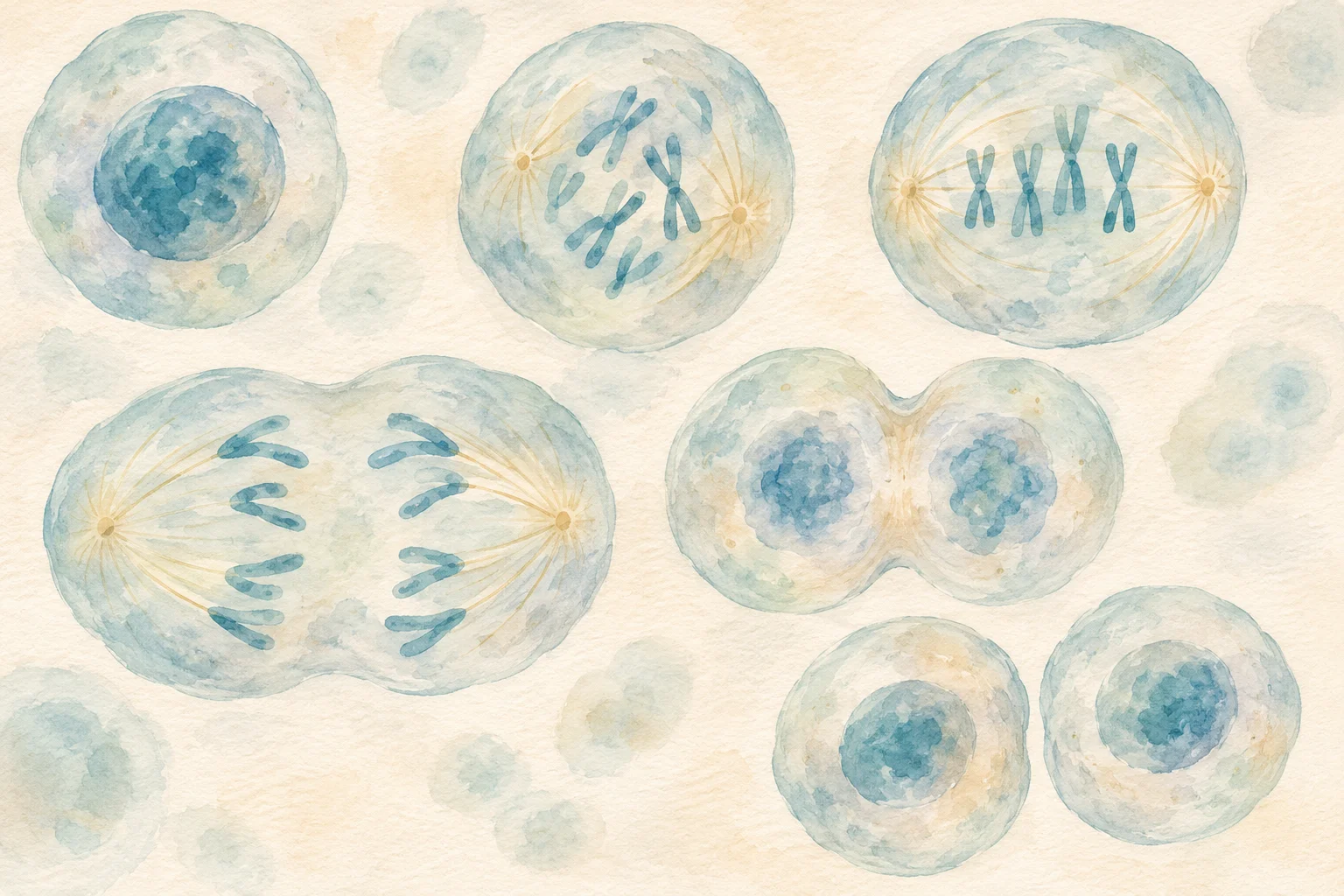
Cell division is a natural and essential process:
- Normal division: Tissue renewal, healing, growth
- Pathological division: Uncontrolled cell multiplication
Silicon, as a trace element, takes part in many fundamental biological processes, some of which are linked to the cell cycle.
The Limits of Our Knowledge
What science has observed:
- Silicon is present in all living cells
- It plays a structural role in tissues
- It takes part in regeneration mechanisms
What remains to be proven:
- The exact mechanisms by which silicon influences cell division
- Clinical efficacy in specific pathologies
- Optimal dosages for different applications
⚖️ The Current Regulatory Framework
European Authorisation
Organic silicon (monomethylsilanetriol) has been authorised as a food supplement by the European Commission since 4 August 2016 (decision no. 2016/1344).
Legal Limits
What a silicon-based food supplement CAN say:
- It contributes to the maintenance of normal connective tissues
- It takes part in the health of the skin, hair and nails
- It supports the normal functions of the body
What it CANNOT say:
- Take the place of a medicine
- Replace medical treatment
- Having specific therapeutic effects not validated by EFSA
Why This Research Remains Relevant Today
A Scientific Foundation Worth Exploring
Even though not all the work from the 1950s to the 1990s has been validated by modern health authorities, it forms a body of knowledge that deserves to be explored further with today's scientific means.
The Costs of Modern Research
Carrying out clinical trials that meet European standards costs several million euros. For a natural trace element that cannot be patented, few companies have the resources needed to fund such studies.
User Experience
Many people have been using organic silicon for decades and report positive experiences, even though these testimonials do not constitute scientific proof in the regulatory sense.
Practical Applications: What We Know for Certain
Recognised Properties of Silicon
Structurally:
- Essential for the production of collagen and elastin
- Contributes to the strength of bones and cartilage
- Contributes to the elasticity of blood vessels
Regeneration:
- Supports normal wound healing
- Supports the renewal of skin tissue
- Contributes to the regrowth of hair and nails
Immune function:
- Plays a part in the functioning of the thymus
- Contributes to the production of lymphocytes
- Supports the body's natural defences
Silicon and Periods of Physiological Stress
When the Body Needs Support
Certain periods of life place particular demands on our physiological resources:
- Post-operative convalescence
- Recovery after significant physical stress
- Periods requiring intense tissue regeneration
- Maintaining vitality during health challenges
In these situations, maintaining an optimal supply of essential nutrients, including silicon, can help support the body in its normal functions.
The Bioavailability Challenge
Silicon of plant origin (horsetail, bamboo, nettle) has a bioavailability limited to around 10%. Organic silicon (monomethylsilanetriol), with its bioavailability of 70 to 90%, offers an alternative that allows a more efficient intake.
Scientific References Cited
-
Charnot Y, Peres G. (1988). Immune system involvement in the biological effects of organic silicon. Immunology and Biological Response Modifiers. PMID: 3135925
-
Carlisle, E.M. (1981). Silicon: a requirement in bone formation independent of vitamin D. Calcified Tissue International, 33, 27-34.
-
Jugdaohsingh R. (2007). Silicon and bone health. Journal of Nutrition, Health & Aging, 11(2), 99-110. PubMed link
-
Exley C., Korchazhkina O., Job D., et al. (2006). Non-invasive therapy to reduce the body burden of aluminium in Alzheimer's disease. Journal of Alzheimer's Disease, 10(1), 17-24.
-
European Commission (2016). Implementing Decision No 2016/1344 authorising monomethylsilanetriol as a novel food ingredient.
⚠️ Important Warnings
Mandatory Legal Notices
This article is provided for educational and informational purposes only. It does not in any way constitute:
- Medical advice
- A treatment recommendation
- An encouragement to self-medicate
- An alternative to conventional treatments
If You Have a Medical Condition
If you are affected by a medical condition of any kind:
- ALWAYS consult your doctor
- Never change a medical treatment without medical advice
- Inform your healthcare professionals of any food supplement you are taking
- Food supplements NEVER replace medical treatment
Limitations of the Research
The studies mentioned in this article are research works that:
- Have not all been validated by the European health authorities
- Require further studies
- Do not allow conclusions to be drawn about specific therapeutic effects
- Are presented for scientific information purposes
Going Further
Additional Resources
To deepen your knowledge of organic silicon:
- Full article: Silicon, an Essential Trace Element
- Scientific databases: PubMed, Google Scholar
Discover a Quality Organic Silicon
If you would like to discover an organic silicon with high bioavailability, Laboratoire Géomer offers a Silicium Organique Forté (monomethylsilanetriol) energised by the ARK Quantique Process® system.
? Conclusion
Research on organic silicon and cell division is a fascinating field that deserves to be explored further with the means of modern science.
Although the historical studies do not allow validated therapeutic conclusions, they laid the groundwork for an understanding of the role of silicon in the human body.
Silicon remains an essential trace element whose gradual decline with age warrants particular attention in order to maintain good vitality.
By Alain Ledroit
CEO Laboratoire Géomer - Holistic cosmetics made using our ARK Quantique Process® method
Caring for yourself naturally
? 881 Avenue Victor Hugo, 08170 Fumay, France
? +33 6 76 70 09 90
✉️ info@laboratoire-geomer.com
? www.laboratoire-geomer.com
Final disclaimer: All the information in this article is provided for educational purposes only and cannot be regarded as medical advice. No treatment should be undertaken based solely on the content of this article. If in doubt, or if you have a medical condition, you must consult your doctor. Organic silicon is a food supplement that replaces neither a medicine nor medical follow-up.