
SILICON AND THE BRAIN
Element no. 14, which protects your brain from element no. 13
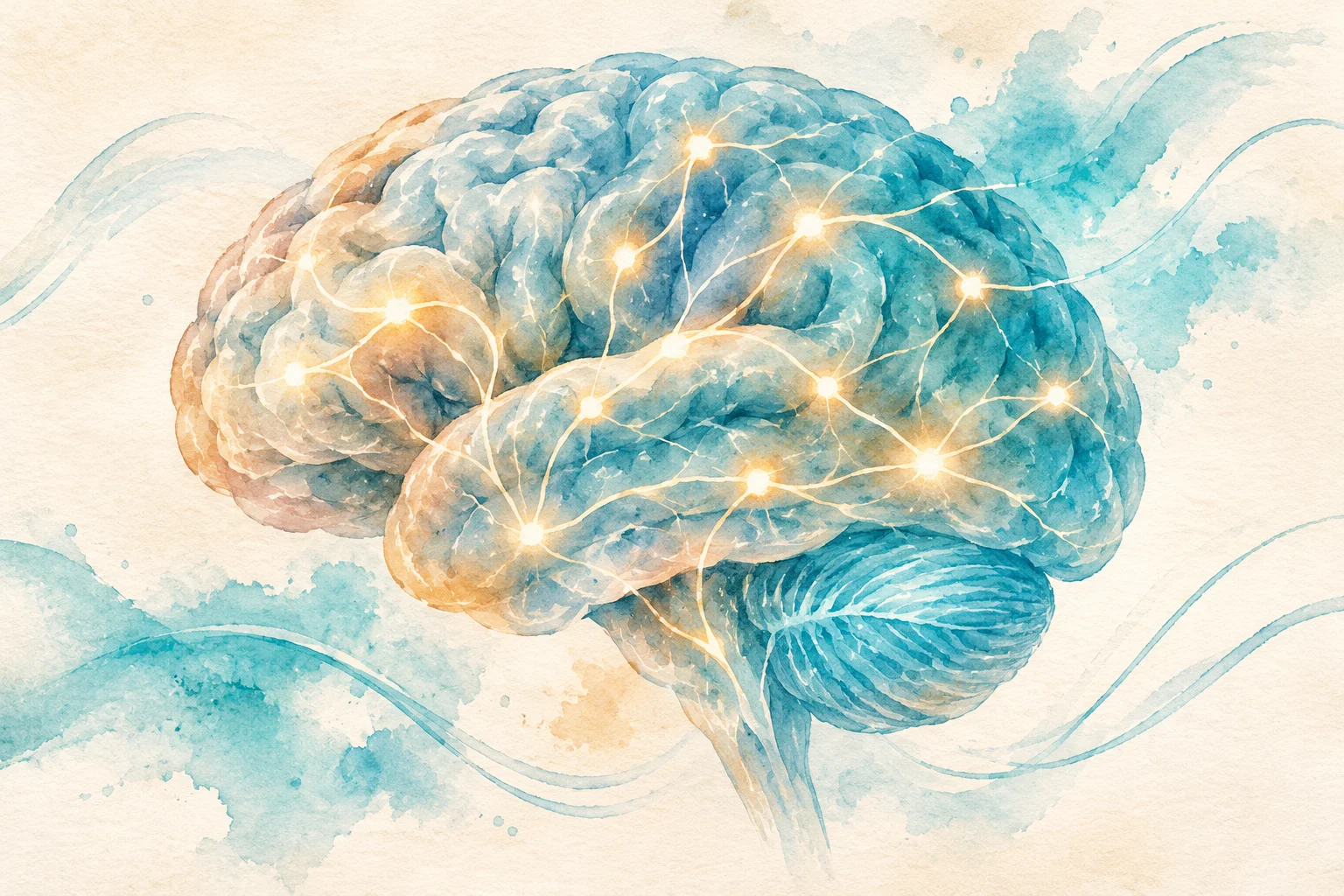
When silicon disappears, aluminium moves in…
By Alain Ledroit – Laboratoire Géomer
Paris, the Médecines Douces show: an encounter that changed everything
It was on 29 January 2026, at my stand I25 at the Wellbeing and Médecines Douces Show in Paris, that it all began. A naturopath passionate about the biochemistry of ageing stopped in front of our products and we started a fascinating conversation. What he explained to me that day literally kept me awake at night.
His explanation was crystal clear: “Open your periodic table of elements. Silicon is number 14. It is present everywhere in our body, and particularly in the brain, where it plays a fundamental role in the electrical transmission between neurons. The problem is that from the age of 25-30, our silicon reserves begin to decline. And as nature abhors a vacuum, it is the closest element in the periodic table that comes to take its place: number 13. Aluminium.”
Aluminium! That metal found in our saucepans, our deodorants, our food packaging, and even in tap water. The very same aluminium that the scientific community increasingly identifies as an aggravating factor in brain ageing.
That very evening, back at the hotel, I dived into in-depth research. What I discovered astonished me: very serious scientific studies, published in recognised international journals, confirm exactly what this doctor had explained to me. And the most surprising thing? Almost no one talks about it.
Silicon: a little-known essential element
Silicon is the second most abundant element on Earth after oxygen. In our body, it is present at around 7 grams, mainly in the bones, tendons, skin, hair, nails… and the brain, where it reaches a concentration of 30 mg per kilogram of dry tissue.
Its role in the brain
To understand it simply: our brain works through electrical impulses. Billions of neurons communicate with each other by sending small electrical signals, a bit like a gigantic telephone network. For these signals to pass correctly, the “polarity” of each cell must be properly regulated – a positive side, a negative side, like a battery.
Silicon plays precisely this regulating role. Thanks to its particular ionic properties, it helps maintain the proper functioning of nerve cell membranes. It also takes part in the synthesis of certain neurotransmitters, the molecules that carry messages between neurons. Without enough silicon, neuronal communication gradually deteriorates.
The inevitable decline
Here is the heart of the problem: from the age of 25-30, our body begins to lose its silicon. This phenomenon is natural and gradual. By the age of 40, we have already lost a significant share of our reserves. At 60 and beyond, the deficiency can become worrying.
And this is where the periodic table story makes complete sense. Silicon (no. 14) and aluminium (no. 13) are neighbours. They share similar chemical properties. When silicon becomes scarce, aluminium, omnipresent in our environment, can move into the vacant spaces. But unlike silicon, aluminium has no useful biological function. It only disrupts.
Aluminium: the silent intruder
We live in what Professor Christopher Exley, of Keele University in the United Kingdom, calls “the Aluminium Age”. This world specialist in aluminium biochemistry has devoted more than thirty years of research to the subject. His conclusions are unequivocal: our daily exposure to aluminium has become considerable.
Where is aluminium hiding?
Aluminium is everywhere in our daily lives: in tap water (used as a flocculating agent in water treatment), in cooking utensils, in food packaging, in certain food additives, in medicines (antacids), in certain cosmetics (notably antiperspirants), and even in the air we breathe.
Our body accumulates this metal over the years. And as Professor Exley has shown, the aluminium present in our body is of no use to us – it can only be neutral or toxic. Yet its biological reactivity means it is rarely neutral.
What aluminium does to the brain
When aluminium builds up in the brain, it causes several disturbances: it disrupts the blood-brain barrier (the protective membrane that filters what enters the brain), it interferes with the transport of nutrients into nerve cells, it triggers inflammatory reactions, it can alter the structure of synapses (the connection points between neurons), and it contributes to oxidative stress, that cellular “rusting” phenomenon that speeds up ageing.
Professor Exley sums up the situation as follows: when the aluminium load in the brain exceeds certain thresholds, it inevitably contributes to neurological disorders. Aluminium acts as a catalyst that can accelerate the onset of age-related cognitive disorders.
Solid scientific evidence… and yet little known
This is undoubtedly the most troubling aspect of this story. The studies exist, they are published in leading scientific journals, and their results are remarkable. Yet they remain largely ignored by the general public.
The clinical study by Davenward and Exley (2013)
Published in the Journal of Alzheimer's Disease, this clinical study tested a simple idea: having people with Alzheimer's disease drink up to one litre of silicon-rich mineral water a day for 12 weeks.
The results were described as “remarkable”:
Urinary excretion of aluminium increased significantly, proof that silicon helped mobilise the aluminium stored in the body. Most importantly: this effect occurred without affecting the elimination of essential metals such as iron and copper. Of the 15 patients in the study, 8 showed no cognitive deterioration during the study period, and 3 of them even showed clinically significant improvements in their cognitive functions.
The 2017 to 2021 work
Professor Exley and his team's research continued and intensified over the years. In 2017, he published a landmark article in the Journal of Alzheimer's Disease Reports, in which he states that aluminium should now be considered a primary aetiological factor (that is, a direct cause) of Alzheimer's disease.
In 2020, his team published in Scientific Reports (a Nature group journal) a detailed comparison of aluminium levels in the brains of people with various neurodegenerative diseases versus healthy brains. The results confirm significantly higher aluminium levels in the affected brains.
In 2021, a new publication demonstrated the co-localisation of aluminium with tau protein tangles in cases of familial Alzheimer's, further strengthening the link between aluminium and the progression of the disease.
How silicon protects us
The mechanism is elegant in its simplicity: silicon exerts a natural electrical attraction on aluminium. When these two elements meet in the body, silicon “captures” the aluminium to form a stable compound called hydroxyaluminosilicate. This compound is non-toxic and can easily be eliminated by the kidneys.
In simple terms: according to this research, silicon binds to aluminium to form a stable complex, which the body naturally excretes in the urine.
MMST: a particularly effective form
Among the various forms of silicon, monomethylsilanetriol (MMST) has a decisive advantage: its small molecular size allows it to cross the blood-brain barrier. This protective membrane, which prevents most substances from reaching the brain, lets MMST through. This means that this form of organic silicon can go directly to target aluminium where it has accumulated – in the brain itself.
The pioneers of organic silicon research, Norbert Duffaut and Philippe Voisin (1957), contributed to documenting these remarkable properties.
Key figures to remember
| Data | Value |
|---|---|
| Silicon in the brain | 30 mg/kg of dry tissue |
| Onset of silicon loss | From the age of 25-30 |
| Atomic number of silicon | 14 (Si) |
| Atomic number of aluminium | 13 (Al) |
| Duration of the Davenward study | 12 weeks |
| Patients who improved (Davenward) | 3 out of 15 (20%) |
| Patients who stabilised (Davenward) | 8 out of 15 (53%) |
Why does nobody talk about it?
That is the question that has haunted me since that memorable evening at the hotel. Clinical studies published in world-renowned scientific journals. Encouraging preliminary results. A clear, documented mechanism of action. And yet… an almost general silence.
Several reasons may explain this phenomenon. First, silicon is a natural, abundant, inexpensive element — it does not represent a lucrative pharmaceutical market.
Second, questioning the safety of aluminium upsets powerful industrial interests.
Finally, research on silicon remains a niche field, carried by a few passionate but insufficiently funded teams.
Professor Exley himself has faced funding difficulties in continuing his work, despite decades of rigorous research and publications in peer-reviewed journals.
How can you naturally support your silicon intake?
Without making any therapeutic claim – because that is not our role – here is what science tells us about natural ways to support our silicon intake:
Diet: some foods are naturally rich in silicon: whole grains (barley, oats, brown rice), pulses, bananas and green beans. Horsetail and nettle are also good sources.
Silicon-rich mineral waters: some mineral waters naturally contain significant amounts of silicic acid. This is in fact the type of water used in the Davenward and Exley study.
Organic silicon: in the form of MMST (monomethylsilanetriol), organic silicon has a higher bioavailability than mineral silicon. Its small molecular size gives it a remarkable ability to penetrate cells.
Reducing your exposure to aluminium: favour stainless steel or cast iron cookware, read the labels of cosmetic and food products carefully, and filter tap water.
Conclusion: listen to science, even when it is inconvenient
That meeting at the Paris Show was a real turning point. As I dug into the subject, I discovered an entire body of scientific research that deserves to be known by everyone. Silicon is not a miracle cure – science does not work that way – but it is an essential element that our body needs, particularly as we grow older.
The work of Professor Exley and his colleagues invites us to become aware of two things.
First, our exposure to aluminium is not trivial.
Second, nature provides us with a simple and safe tool to protect ourselves: silicon.
At Laboratoire Géomer, this understanding of the link between natural elements and the body's well-being is an integral part of our holistic approach. Our two organic silicons are formulated with this global vision of the body and its needs, and energised according to our exclusive Géomer ARK Quantique Process® method:
• Silicium Organique Forte – Oral food supplement based on Monomethylsilanetriol (MMST). Original 1957 formula according to Norbert Duffaut, 80% assimilable by the body. Energised according to ARK Quantique Process®.
• Silicium Organique Vitalis – A powerful combination of Monomethylsilanetriol and Chestnut Ellagitannins (anti-free radical). Regeneration and protection. Energised according to ARK Quantique Process®.
These two formulas incorporate our exclusive manufacturing technique, which optimises the formulation of the ingredients to improve their efficacy. The Géomer ARK Quantique Process® is our signature: each product is energised according to a unique protocol inspired by the law of the 5 Elements of Traditional Chinese Medicine and the principles of Reiki Usui.
My personal testimony
“Personally, I drink a 30 ml measuring cup of Silicium Organique Vitalis every day to protect myself from the discomforts of ageing. I chose Vitalis over Forte for a simple reason: its Chestnut Ellagitannins also provide an anti-free radical action that contributes to the well-being of my intestines – that famous “second brain” that the scientific world talks about more and more. The gut-brain axis is now recognised by research: our intestines are home to millions of neurons and communicate constantly with our brain. Caring for one means caring for the other. For me it is a simple daily gesture, a well-being ritual that I give myself every morning. And I am certain I will end my life with all my wits about me.”
— Alain Ledroit, Reiki Usui Master, creator of the ARK Quantique Process®, founder of Laboratoire Géomer
Scientific references
Davenward S, Bentham P, Wright J, Crome P, Job D, Polwart A, Exley C. « Silicon-Rich Mineral Water as a Non-Invasive Test of the 'Aluminum Hypothesis' in Alzheimer's Disease ». Journal of Alzheimer's Disease, 2013; 33(2): 423-430.
Exley C. « Aluminum Should Now Be Considered a Primary Etiological Factor in Alzheimer's Disease ». Journal of Alzheimer's Disease Reports, 2017; 1(1): 23-25.
Exley C et al. « Aluminium in human brain tissue from donors without neurodegenerative disease ». Scientific Reports (Nature), 2020; 10(1): 7770.
Mold M, O'Farrell A, Morris B, Exley C. « Aluminum and Tau in Neurofibrillary Tangles in Familial Alzheimer's Disease ». Journal of Alzheimer's Disease Reports, 2021; 5(1): 283.
Exley C. « Darwin, natural selection and the biological essentiality of aluminium and silicon ». Trends in Biochemical Sciences, 2009; 34: 589-593.
Disclaimer: This article is written for information and general knowledge purposes. It does not under any circumstances constitute medical advice or a therapeutic recommendation. The studies cited are presented for information only. For any question relating to your health, consult a qualified healthcare professional. Laboratoire Géomer's cosmetic products are cosmetics within the meaning of European Regulation 1223/2009 and are not medicines.
Laboratoire Géomer
881 Avenue Victor Hugo – 08170 Fumay – France
Tel / WhatsApp: +33 6 76 70 09 90 – info@laboratoire-geomer.com