
In June 2025, I did something I never thought I would be able to do again.
I put my contact lenses back in their case. For good.
I had been wearing corrective lenses for astigmatism since the age of 20. And since I turned 49, I had added presbyopia to the list of my everyday visual discomforts – that gradual inability to focus up close that affects almost everyone after 45.
At 60, I no longer wear either lenses or reading glasses. I still have slight astigmatism, but presbyopia – the one my ophthalmologist considered irreversible – no longer bothers me day to day.
I am not saying this to sell you anything. I am telling you what I observed, and above all why the biology of organic silicon makes this result coherent – even though no clinical study today allows it to be asserted as a medical certainty.
What is presbyopia, really?
Presbyopia is not a disease. It is the mechanical ageing of a very specific structure in your eye: the lens.
The lens is a natural biconvex lens, transparent and elastic, located behind your iris. Its function is to change its curvature according to the distance of the object you are looking at – this is what is called accommodation.
To function, the lens is held in place by zonular fibres: tiny tendons of connective tissue that anchor it to the ciliary body. By pulling or releasing these fibres, the ciliary muscle changes the curvature of the lens and adjusts the focus.
With age, several things happen simultaneously:
- The lens loses its elasticity and gradually becomes more rigid
- The zonular fibres of connective tissue weaken
- The ciliary muscle struggles to compensate for this growing rigidity
The result: near vision becomes blurred, then intermediate vision. What conventional medicine considers inevitable, the biology of connective tissue allows me to question in a different way.
Silicon in the eye – a rarely mentioned biological fact
Here is what most opticians and ophthalmologists do not tell you at your first presbyopia appointment:
Organic silicon is naturally present in your lens.
This is not an alternative theory. It is a documented anatomical reality. Silicon is found in bones, cartilage, skin, hair and nails, tooth enamel – and in the lens of the eye.
Silicon is one of the major constituents of connective tissue, the most abundant tissue in our body. And the zonular fibres that hold and operate the lens are precisely connective tissue.
Silicon plays a fundamental role in this tissue: it stimulates and regulates the multiplication of fibroblasts, the cells responsible for producing collagen and elastin. These two proteins are what give connective tissue its suppleness and elasticity.
The question then arises of its own accord: if the lens and its supporting structures contain silicon, and if this silicon manages the elasticity of the fibres that operate focusing... what happens when silicon runs short?
Silicon depletion – the overlooked ageing mechanism
At birth, we are rich in organic silicon. From adolescence onwards, this reserve begins to decline. And here is the figure that should be displayed in every ophthalmology practice:
By adulthood, the human being has already lost up to 80% of their initial reserve of organic silicon.
And unlike other elements, the adult body is unable to convert the mineral silicon it ingests (in food, in water) into organic silicon that cells can assimilate. The reserve does not replenish itself spontaneously.
This gradual depletion affects all silicon-rich tissues:
- The skin loses its elasticity (wrinkles, sagging)
- The joints stiffen (less supple cartilage)
- The blood vessels lose tone
- Hair and nails weaken
- And probably... the lens and its zonular fibres gradually lose their accommodative suppleness
This is not an established medical certainty. It is a biologically coherent hypothesis – and it is precisely what my personal experience came to illustrate.
My personal protocol – and what I observed
I am Alain Ledroit, founder of Laboratoire Géomer, Reiki Usui Master and creator of the ARK Quantique Process®. I have been formulating holistic cosmetics for more than 15 years, and organic silicon is one of my signature active ingredients.
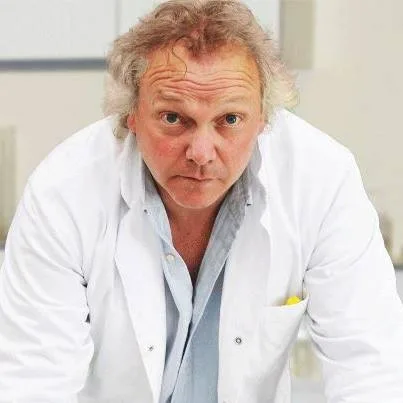
For several years, I have taken one measure of Silicium Organique Vitalis every morning and one measure of Silicium Organique Forté every evening.
This is not an occasional intake. It is a continuous supplementation, part of a logic of maintaining connective tissues – joint, skin and vascular.
In June 2025, I decided to stop wearing the astigmatism lenses I had worn for 39 years – because I had noticed that my vision had changed. My contact lenses were becoming bothersome.
What I have observed since:
- No discomfort when reading up close – whereas presbyopia had set in at 49
- Slight residual astigmatism, but largely compensated without correction
- Clear, stable intermediate vision (screen, dashboard)
I cannot attribute this result to organic silicon alone with the certainty of a controlled clinical trial. What I can say is that nothing else has changed in my life apart from this continuous supplementation – and that biology explains why this result is mechanically plausible.
What users of organic silicon say about their eyes
Testimonials from users of organic silicon about vision are numerous, long-standing, and consistent with one another. They notably concern:
- Reported improvements in corneal comfort
- Vision perceived as more stable with age
- Relief reported for dry eyes
- An impression of clearer vision among some users
These testimonials do not constitute medical proof. But their consistency with the biology of silicon in ocular structures deserves reflection.
Silicon was, moreover, historically used in ophthalmology: eye medicines already contained organic silicon as an active ingredient before the economic logic of the pharmaceutical industry favoured other routes.
Organic silicon and visual fatigue – the screen angle
Beyond presbyopia, organic silicon is of interest for an issue that today affects 70% of workers: screen-related eye strain.
Dry eyes, tingling, blurred vision at the end of the day, frontal headaches – these symptoms are the direct consequence of dehydration of the ocular surface and excessive tension of the ciliary muscles.
Silicon acts here on several levels:
- Action on the connective tissue of the eye muscles – suppleness and recovery
- Support for ocular microcirculation through its vascular action
- Hydration of cell membranes – silicon is a vector of intracellular hydration
In Traditional Chinese Medicine, visual fatigue is not treated as a screen problem. It is read as a sign of weakness of the Liver – the organ governing the Wood element, of which the eyes are the associated sense organ.
In TCM, the Liver governs the eyes (vision, acuity, ocular moisture), the tendons (and by extension the fibres of connective tissue), and the blood that nourishes the tissues. Supporting the Liver energetically – while simultaneously nourishing the ocular connective tissue through silicon – represents a coherent holistic approach between East and West.
Géomer's Silicium Organique Forté – our signature formula
Laboratoire Géomer's Silicium Organique Forté is formulated according to our exclusive ARK Quantique Process® – a method that integrates the theory of the 5 Elements of TCM, Reiki and principles of quantum coherence into manufacturing.
It is not just a simple silicon food supplement. It is a holistic care product designed to support all the connective tissues – skin, joints, vessels, hair and nails – while respecting the overall energetic balance of the body.
What we can state:
- Silicon contributes to the normal maintenance of skin, hair and nails
- It participates in the proper functioning of connective tissues
- It is naturally present in the lens and ocular structures
What we share with you: a testimony, a biology, and an invitation to observe.
How to incorporate organic silicon into a daily routine
If you would like to try organic silicon supplementation within a preventive and holistic approach, here is the protocol I personally follow:
Morning: 1 measure of Silicium Organique Vitalis (the form with chestnut tannins, ideal for the day)
Evening: 1 measure of Silicium Organique Forté (concentrated form, for night-time regeneration)
Duration: a minimum of 3 months to observe effects on connective tissues – connective tissue renews itself slowly.
Consult your doctor or healthcare professional before any supplementation if you have a diagnosed eye condition or if you are undergoing treatment.
Frequently asked questions about organic silicon and the eyes
Can organic silicon improve presbyopia?
There is no controlled clinical study on this subject to date. The biology of silicon in ocular structures (lens, zonular fibres, connective tissue) makes this hypothesis mechanically coherent. My personal experience is a testimony, not medical proof.
Is organic silicon good for dry eyes?
Silicon supports microcirculation and the hydration of cell membranes. Our products are cosmetics and food supplements – not ophthalmological medical devices.
From what age should you start silicon supplementation?
Depletion begins in adolescence and accelerates after 30. Preventive supplementation from the age of 35-40 is consistent with the logic of maintaining connective tissue.
Are there any contraindications?
Organic silicon is generally well tolerated. Consult your doctor if you have a medical condition, or in case of pregnancy or breastfeeding.
Conclusion: what if your eyes were not a fatality?
Presbyopia is presented as inevitable and irreversible. For many people it indeed is – because the underlying biological mechanisms are not acted upon; they are merely compensated for optically.
I do not claim to have found a universal remedy. I am sharing a personal observation consistent with a documented biological reality: silicon is a constituent of the structures that allow your lens to function, and we lose 80% of it over our lifetime.
What you do with this information is up to you.
If you too have an experience in this area to share with me, please do not hesitate to send me a message.

Alain Ledroit, CEO Laboratoire Géomer, Reiki Usui Master, creator of the ARK Quantique Process®
Info@laboratoire-geomer.com